Author Archives: Dr Alex Rabinovich

Can Smokers Get Dental Implants? Some Q&A

blog | September 5, 2014 – San Francisco, CA
Can Smokers Get Dental Implants?

Most people would agree that smoking is not good for you. Statistics show that smokers die an average of 14 years earlier than non-smokers, and very often in ways which are not pleasant. One in five smokers will die as a direct result of the habit.

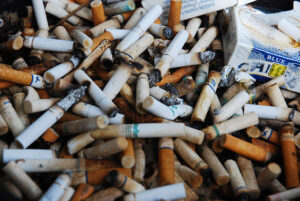
However, it is not just the fact that you will miss out on 14 Christmases and birthdays; smoking can do considerable damage to your teeth. Not only will it stain your teeth and make your breath smell foul, it can have a serious effect on your gums and jawbone. While we strongly encourage all smokers to quit as soon as possible, we get quite a few inquiries in our San Francisco office about whether smokers can get dental implants. The answer is ‘it depends.’

Visit San Francisco Dental Implant Center
You need to come in for a full, free consultation to evaluate your oral health, and then we can decide on a best plan of action for you. Since we are conveniently located near BART, you can take BART in from Oakland, Pleasanton, or Fremont, or you can take Caltrain up from Peninsula cities like San Mateo or Palo Alto. Wherever you are in the San Francisco Bay Area, our office is convenient – by BART, Caltrain, or even Car. But back to smoking and dental implants.

Smokers and Dental Implants: NOT a Match Made in Heaven

Irritates Gum Tissue
Smoking irritates gum tissue and will reduce blood flow to the gums. This can cause damage that can result in the gums receding from the teeth. In a mouth that is healthy, the gums stay tight around the base of the tooth, providing protection to the roots. When the gums draw away from the tooth it leaves the roots unprotected and subject to decay. What is worse is that food particles can get trapped in pockets under and around the roots, which become a haven for bacteria which just love to feed on them. The tooth will also become very sensitive to hot and cold liquids and foods.

It Gets Worse
It gets worse. As the gum conditions worsen and the growth of bacteria increases, it will lead to bad breath, bigger cavities, infections, mouth ulcers and increased growth of plaque. When plaque remains in the mouth for any length of time it will cause the development of biofilm on the teeth, which is a hard bacterial coating that is not removed by brushing. Plaque eventually hardens into tartar, which is a layer on the teeth and gums not unlike cement. Tartar simply makes the gum situation worse, and can cause bleeding and pain.

Furthermore, smoking may also cause an inflammation of the salivary glands together with bone loss in the jaw. It is also the case that smokers are more likely to suffer from oral cancer.

There is a possibility that an unhealthy mouth can contribute to other diseases in the rest of the body. Researchers are finding connections between poor oral health and inflammation, and other infections. It is now thought that heart disease, respiratory diseases, and arthritis may be connected with bacteria introduced orally.

How does this affect the opportunity for smokers to enjoy all the benefits of dental implants? It is true that some smokers may not be suitable patients for dental implants, but fortunately, in most cases smokers can have dental implants inserted in the same manner as non-smokers.

Dental implants are so far advanced from dentures that they might be described as comparing a Ferrari to a push bike. They are inserted into the jawbone itself and become a fixture, so that not only do you benefit from a wonderful smile again, rather than having to hide your teeth in shame, but they do not slip about when you are eating. It may be that with dental implants you can enjoy once again eating foods that you may not have been able to taste for 30 years or more.

Free Consultation: As a Smoker do you Qualify for Dental Implants?

In order to find out if you qualify for dental implants, you can obtain a free dental implant consultation at San Francisco Dental Implant Center. Located on Sacramento Street, you can call our office to see if you are a suitable candidate on (415) 992-9188.
‘Dental Implants vs. Dentures’ Explained in Informative Blog Post, Announces San Francisco Dental Implant Center

blog | September 4, 2014 – San Francisco, CA

San Francisco Dental Implant Center Releases Informational Post on How to Select the 'Best' Dental Implant Center in the Bay Area
San Francisco Dental Implant Center, a leading provider of high quality, affordable dental implants to Bay Area residents, is proud to announce a new blog post on the top of dental implants vs. dentures. Dr. Alex Rabinovich, chief surgeon at San Francisco Dental Implant Center, has explained that many patients are confused about the difference between having dentures fitted and dental implant procedure, and what the likely outcomes will be in each case.

“Patients come to us all the time asking whether dental implants are better than dentures, and also why they are more expensive,” explained Dr Rabinovich, “so we have put up a blog post in order that they can get the answers they are seeking, and are able to decide for themselves if implants are the way they want to go.”

For more information and to read the informative blog post, please visit https://oldsite.sfdentalimplants.com/. There one finds a uniquely San Francisco perspective on dental implants.

Dental Options: Dentures vs. Dental Implants

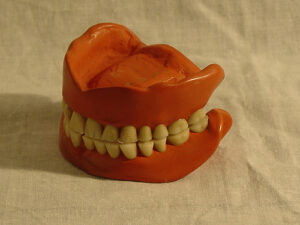
Only a few short years ago, people who had lost teeth had the option of dentures or bridges to replace a missing tooth. Unfortunately, neither of these options was perfect, but the era of dental implants was still in the future. Both bridges and dentures are not perfect from an esthetic point of view, but may also cause the patient discomfort when eating, not to mention a feeling of low self-image. Bridges require the partial destruction of adjacent teeth and can cause the loss of those teeth in later years.

Some wearers of dentures also find that they can make a clicking sound when eating or talking, both of which situations can cause considerable embarrassment to the patient.

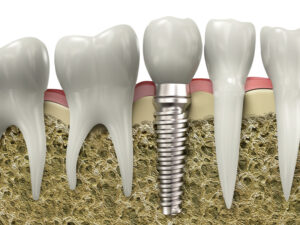
Dental implants, on the other hand, in effect replace the original tooth as nearly as can be imagined. The discovery that titanium can actually bond with human bone was responsible for the advancement of dental implants. The dentist inserts a titanium implant in the form of a screw into the jawbone. This then bonds with the jawbone as the bone grows tight around the screw, keeping it firmly in place. A ceramic replacement tooth is then fitted on top of the implant. The reader is referred to the complete blog post, or for a ‘free consultation’ at the San Francisco Dental Implant Center to learn more about dental implant options vs. traditional dentures.

About San Francisco Dental Implant Center

San Francisco Dental Implant Center, under the direction of Dr. Alex Rabinovich, focuses on the placement and restoration of dental implants, making its team among the most experienced in the Bay Area. Dr. Rabinovich is a Board Certified Oral and Maxillofacial Surgeon specializing in the field of dental implants. This additional training, along with his years of experience, sets Alex Rabinovich MD DDS apart from the growing number of general dentists offering dental implant treatments.

Contact:
San Francisco Dental Implant Center, Media Relations
Web. https://oldsite.sfdentalimplants.com/
Email. visage.sanfran@gmail.com
Tel. (415) 992-9188

Dental Implants vs. Dentures: Why Consider Dental Implants?

blog | August 31, 2014 – San Francisco, CA
Dental Implants vs. Dentures

If you have ever had the misfortune to have worn dentures, you will probably already know the answer to that question. Dentures were invented as a substitute for teeth that had been lost, in order that a patient could once again have a good looking smile, and – more importantly – be able to eat and chew properly once more.

Up to a certain point, they worked. As one of the San Francisco Bay Area’s leading centers for dental implants, we get many questions about why dental implants are superior to traditional dentures. Everyone in image-conscious California wants a beautiful smile, and the latest technology. But while dentures can give you a great looking smile, they have problems. For example, they have to be inserted into your mouth, held in place with a glue, and feel uncomfortable. Sure, you can get used to the feeling of them in your mouth after a time, but the problem is that they tend to slip about and come loose when you eat.

This quick blog post will help you understand the differences between dental implants and dentures. Let’s get started!

The Tremendous Pressure of the Human Jaw

If you think about it this makes perfect sense. When you chew on food, especially hard foods such as nuts, or tough beef, there is a tremendous amount of pressure put on your teeth. If those teeth are not fixed into your jawbone, but are sitting on top of it held in place with glue, it is fairly obvious that the pressure will cause the dentures to slip and slide about.

Back in the dark ages, dentures certainly had their place. However, times have changed and things have moved on. When the Wright brothers flew their first aircraft, everyone was amazed. However, one hundred years later, if you were asked to fly off on your holiday in one of those planes, you wouldn’t even consider it.

Eat Naturally with Superior Dental Implants

Much the same thing has happened in dentistry. Today, dental implants are the jet aircraft of the day. Not only can they give you a great smile – which they do – but they can give you the ability to eat in exactly the same way as you used to do with your natural teeth. Here in the San Francisco Bay Area, we are always on the cutting edge of technology, and that’s no less true in dentistry than it is in semiconductors.

Why are do dental implants allow you to eat naturally? The reason for this is that the implants themselves are inserted into, and in effect become, part of your jawbone, just as your original teeth were. There is no possibility that they can slip about, no matter what foods you choose to eat. With dental implants, you can eat foods that you may not have been able to eat for years. The fact that they also give you a winning smile is merely a bonus. If you think about it, your smile is not for your benefit because you don’t see it. It is for the benefit of others.

However, when you can once again eat whatever you wish, and enjoy tastes that you may have thought you would never be able to enjoy again, then that is entirely for your benefit, and the major advantage of choosing dental implants.

Get a Free Consultation on Dental Implants in our San Francisco Office

Dr. Alexander Rabinovich is a leading San Francisco Oral Surgeon and can assess whether you are a suitable patient for dental implants. Fortunately, most people are, as there are only a few conditions which might make a patient unsuitable. Dr. Rabinovich is an expert in restoring your smile, and your ability to eat whatever you wish, and can replace a single tooth, many teeth, or even all your teeth in a process known as “teeth in a day”.

For a free consultation and assessment, just call our office or simply click on the Get In Touch link above. You are only a step away from being able to smile, laugh, and above all, eat in comfort once again.

What are Dental Implants Made of? Titanium: Learn More

blog | August 30, 2014 – San Francisco, CA

What are Dental Implants Made of?
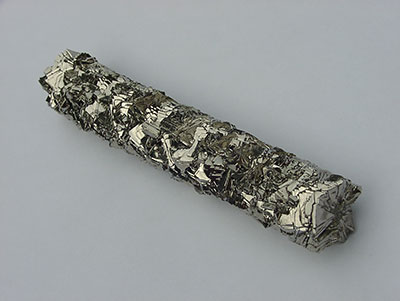
Titanium is an amazing metal and has many uses; it is especially suited to implants into the human body, in particular hip and other joint replacements, and dental implants. The name “Titanium” was derived from Greek mythology, the Titans being extremely strong warriors. Being a top dental implant surgery center in San Francisco, we get many questions on the theme of ‘What are Dental implants made of?’ – so here’s an explanation.

Because of its light weight and strength, it has many uses for the military, and is used in aircraft, ships, missiles, spacecraft, and for armor plating. In civilian life it is used in things such as bike frames, tennis and squash rackets, spectacle frames, golf clubs, and laptop computers, in addition to its uses in jewelry.

Titanium for Dental Implants: Strength

Titanium is an extremely strong metal, yet is light in weight. It does not conduct heat very well nor does it conduct electricity easily. It is also corrosion resistant. In addition, as a dental implant it will not be rejected by the body and has the property of bonding very well with bone. It is also inert, which means that it will not react with any chemical.

Titanium is almost as corrosion resistant as platinum, and will resist most acids, together with saline solutions, and chlorine gas. It is as strong as steel, yet 45% lighter. Although it is 60% heavier than aluminum, it is twice as strong. Thus, it is perfect for use in situations where strength combined with light weight is a requisite, and also in situations where metal fatigue might be an additional issue.

When used as a dental implant it is in the form of a screw which is inserted into the jawbone. In effect, it becomes a new root for the missing tooth. Once inserted into the jawbone, the bone will then heal and grip the titanium screw tightly and grow over the top of it. A crown made of a ceramic material is then placed on top of the implant.

Healing and Dental Implants

While the bone is healing and bonding with the titanium implant, the dentist will place a temporary crown on top of it which will remain in place until the permanent crown is fitted some months later.

The advantages of titanium dental implants over dentures are many. Not the least of these is that the titanium implant in effect replaces the root of the original tooth, and is just as strong, if not stronger. For all practical purposes it does exactly the job that the original tooth did, but has the big advantage that it is not subject to decay.

You get the big advantage of having a perfect smile once again, but better still is that you can eat in exactly the same way that you did when you had your natural teeth. While dentures might give the appearance of real teeth, the truth of the matter is that they do have a tendency to slip about when you are eating, which can be not only uncomfortable, but may prevent proper chewing.

Not all patients are suitable for titanium implants, but fortunately, most are. In order to see whether or not you qualify, you will need a free dental implant consultation with a top oral surgeon. San Francisco Dental Implant Center can make you an appointment with one of their specialists. For your free consultation, call them on (415) 992-9188.

San Francisco Dental Implant Technology Overview

blog | July 30, 2014 – San Francisco, CA
San Francisco Dental Implant Technology Overview

Dental implant surgery is commonly misunderstand by people, even in San Francisco, yet it is the most effective solution for long-term oral health. People tend to be reluctant about the going to the dentist for a few reasons: Cost, Pain, and Being unfamiliar with the procedures, thus being afraid.

As San Francisco’s Top Dental Implant Center, we’ve put together a brief overview of dental implant surgery and the technology behind it.

Reasons for Dental Implants

  • Replace one or more missing teeth without affecting adjacent teeth.
  • Resolve joint pain or bite problems caused by teeth shifting into missing tooth space.
  • Restore a patient’s confident smile.
  • Restore chewing, speech, and digestion.
  • Restore or enhance facial tissues.
  • Support a bridge or denture, making them more secure and comfortable.

Dental implants are changing the way people live! With them, people are rediscovering the comfort and confidence to eat, speak, laugh and enjoy life.

We care about the well-being of our patients oral health, and you see that from the very first visit. We add a personal touch that our patients have raved over for years. Word of mouth from our patients always includes the fact that we aren’t just a sterile office with scalpels in our hands and dollar signs in our eyes, but rather a warm, friendly, and no-nonsense staff that genuinely cares about what is best for our patients.

Resources on Dental Implants

Wikipedia: http://en.wikipedia.org/wiki/Dental_implant
A dental implant (also known as an endosseous implant or fixture) is a surgical component that interfaces with the bone of the jaw or skull to support a dental prosthesis such as a crown, bridge, denture, facial prosthesis or to act as anorthodontic anchor. The basis for modern dental implants is a biologic process called osseointegration where materials, such as titanium, form an intimate bond to bone. The implant fixture is first placed, so that it is likely to osseointegrate, then a dental prosthetic is added. A variable amount of healing time is required for osseointegration before either the dental prosthetic (a tooth, bridge or denture) is attached to the implant or an abutment is placed which will hold a dental prosthetic.

American Academy of Cosmetic Dentistry: http://www.aacd.com/index.php?module=cms&page=569
The key benefit of dental implants over other tooth replacement systems is that an implant connects directly to the jaw bone. It’s obviously not the same as the original connection, but functions just the same. When a tooth is lost, bone loss will eventually occur in that region because the root is no longer stimulating and stabilizing the bone. By using titanium–which biochemically joins to bone–to replace the root, you get a bond that more accurately replicates the one found in nature.

San Francisco Dental Implant Surgery: http://www.oralsurgery-sf.com/dental-implants
X-rays and impressions (molds) are taken of the jaw and teeth to determine bone, gum tissue, and spacing available for an implant. While the area is numb, the implant will be surgically placed into the bone and allowed to heal and integrate itself onto the bone for up to six months. Depending on the type of implant, a second surgery may be required in order to place the “post” that will hold the artificial tooth in place. With other implants the post and anchor are already attached and placed at the same time. After several weeks of healing, the artificial teeth are made and fitted to the post portion of the anchor. Because several fittings may be required, this step may take one to two months to complete. After a healing period, the artificial teeth are securely attached to the implant, providing excellent stability and comfort to the patient.

Call us today at (415) 992-9188 or schedule a free consultation.